Running a business is not just about generating revenue. It is also about knowing when money will come in, when payments are due, and whether enough cash will be available to cover upcoming expenses. Even a profitable business can face financial difficulties if its cash flow is not managed properly.
This is where cash flow forecasting becomes important. It helps business owners look beyond their current bank balance and understand what their financial position may look like in the coming weeks or months. With accurate forecasts, businesses can make better financial decisions, prepare for unexpected expenses, and plan for sustainable growth.
What Is Cash Flow Forecasting?
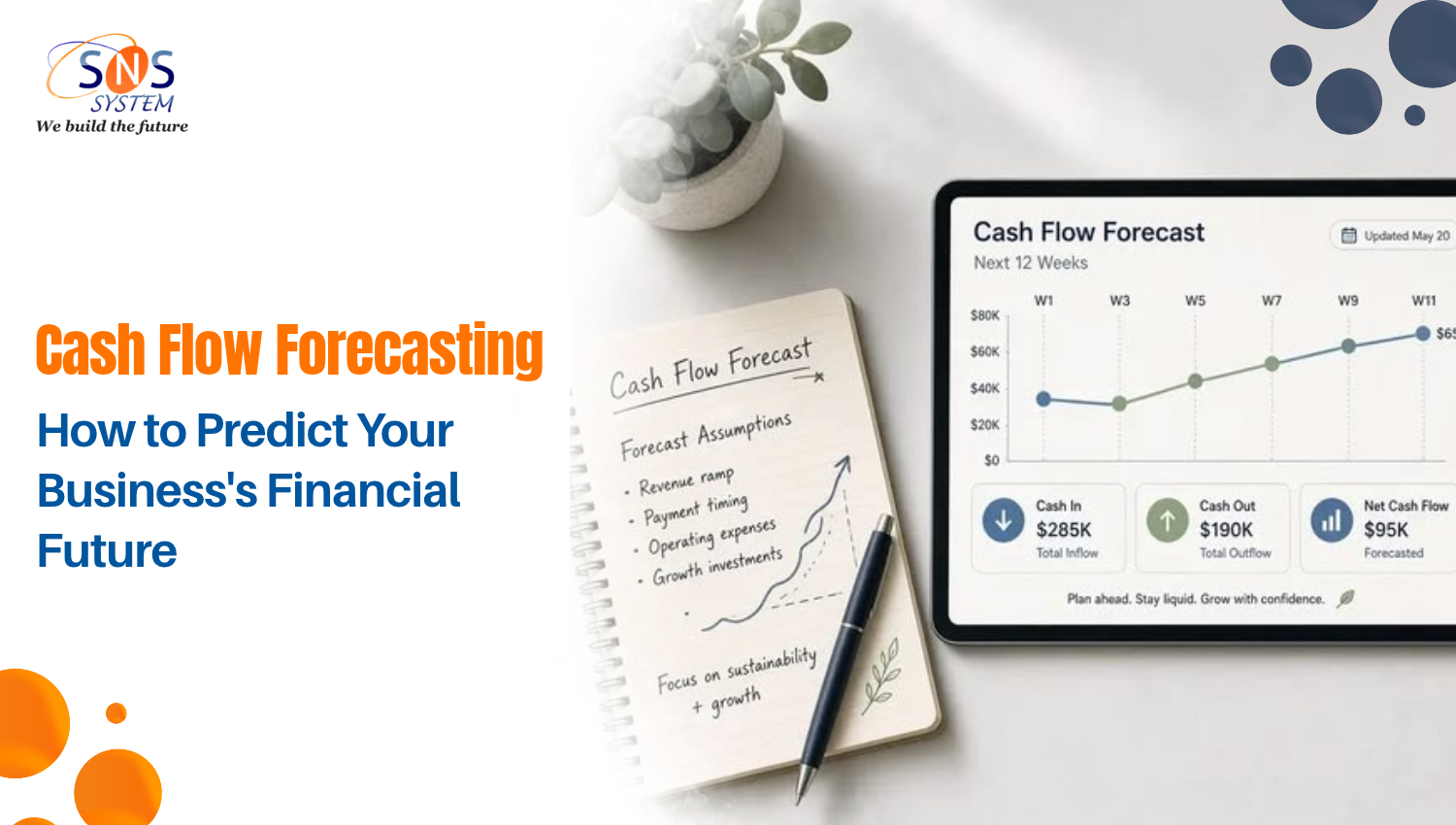
Cash flow forecasting is the process of estimating the money expected to enter and leave a business over a specific period. It considers incoming payments, customer invoices, operating expenses, payroll, supplier bills, loan payments, and other financial commitments.
A cash flow forecast can cover a weekly, monthly, or longer period. Some businesses also use a rolling 13-week forecast to monitor their short-term financial position and a 12-month forecast for long-term planning.
The goal is simple: understand whether your business will have enough available cash to meet its financial obligations when they become due.
Why Is Cash Flow Forecasting Important for Businesses?
A business can show a healthy profit on paper and still struggle to pay its bills. For example, a company may complete several projects and issue invoices, but if customers take 60 days to pay, the business might not have enough cash available for payroll or supplier payments.
Cash flow forecasting helps businesses identify these situations before they become serious problems.
Here are some important benefits:
1. Identify Potential Cash Shortfalls Early
Forecasting helps you recognize periods when expenses may exceed incoming payments. Instead of discovering a shortage when a payment is already due, you can prepare in advance by adjusting expenses, following up on outstanding invoices, or arranging additional funding.
2. Make Better Business Decisions
Planning to hire employees, purchase equipment, or expand operations? A cash flow forecast gives you a clearer picture of whether your business can comfortably afford these decisions.
3. Improve Expense Management
By understanding upcoming financial commitments, businesses can prioritize essential expenses, manage unnecessary spending, and plan supplier payments more effectively.
4. Prepare for Seasonal Changes
Many businesses experience fluctuations in revenue throughout the year. Forecasting helps account for seasonal demand, slower sales periods, and changes in operating costs.
5. Build Confidence with Lenders and Investors
When seeking funding or discussing business growth, having forward-looking financial projections can help demonstrate that you understand your financial position and have a plan for managing future cash requirements.
How to Create an Effective Cash Flow Forecast
An effective forecast starts with reliable financial information. While every business has different requirements, the following steps provide a practical foundation.
Step 1: Review Your Current Financial Data
Start by reviewing your accounting records, invoices, bills, payroll, recurring expenses, and historical cash flow patterns. Accurate information creates a stronger foundation for forecasting.
Step 2: Estimate Future Cash Inflows
Identify the money your business expects to receive. This may include customer payments, sales revenue, subscriptions, deposits, and other sources of income. Consider actual payment patterns rather than assuming every invoice will be paid on time.
Step 3: Calculate Expected Cash Outflows
List upcoming expenses, including salaries, rent, utilities, supplier payments, taxes, loan installments, and other operating costs.
Step 4: Compare Inflows and Outflows
Compare the expected incoming and outgoing cash to estimate your future cash position. This helps identify periods when available funds may become tight.
Step 5: Update Your Forecast Regularly
A cash flow forecast should not be a one-time exercise. Update it as new invoices, payments, expenses, and business changes occur. Regular updates help keep your projections relevant.
How Technology Makes Cash Flow Forecasting Easier
Managing financial projections through spreadsheets can become time-consuming, particularly when a business handles multiple accounts, recurring expenses, or large volumes of transactions.
Modern financial technology can simplify this process by connecting accounting data with forecasting and reporting systems.
For example, Zoho Books can provide financial information used in forecasting, while Zoho Analytics can present that information through customized dashboards and visual reports. AI-assisted forecasting can also help businesses review financial patterns and access updated projections more conveniently.
Depending on their requirements, businesses can use automated reports, interactive dashboards, or custom-built forecasting portals instead of relying entirely on manual spreadsheets.
However, technology alone is not enough. Forecasts still need appropriate setup, reliable data, and regular validation to remain useful.
Why Choose Managed Cash Flow Forecasting Services?
Many forecasting tools expect business owners to configure integrations, organize financial categories, create reporting models, and interpret the results themselves. This can be challenging for teams that already have demanding daily responsibilities.
A managed cash flow forecasting service offers another approach. Instead of handling the entire setup independently, businesses can work with a technology team that builds and maintains a forecasting solution around their existing accounting systems and reporting requirements.
SNS System provides customized cash flow forecasting services using options such as:
- AI-Assisted Forecasting: Receive scheduled financial projections and request updated forecasts when needed.
- Zoho Analytics Dashboards: View cash flow information through customized, interactive reports.
- Custom Forecasting Portals: Use purpose-built forecasting tools with business-specific inputs and scenario modeling.
- Existing Software Integration: Connect your current accounting or finance software without necessarily changing platforms.
As a Zoho Advanced Partner, SNS System also helps businesses connect their financial data through tailored Zoho solutions. Forecasting implementations undergo dedicated testing to check data connections, compare projections against historical results, and identify potential inconsistencies.
Take Control of Your Business’s Financial Future
You cannot predict every financial challenge, but you can prepare for many of them. Cash flow forecasting gives you a clearer view of what lies ahead, helping you manage expenses, plan investments, and make informed business decisions.
With the right technology and professional support, forecasting does not have to mean maintaining complicated spreadsheets or configuring another tool on your own.
SNS System helps businesses build and manage customized cash flow forecasting solutions that fit their existing systems and financial workflows.
Want to understand what your business’s cash position could look like in the coming weeks or months?
Explore our Cash Flow Forecasting Services and schedule a consultation with SNS System to discuss the right forecasting approach for your business.

